Career Paths

January 18, 2023

education system in india
Study Abroad from Bangladesh

Indian Education system – History, Levels, University, Program

With a wide variety of educational systems, vibrant cultures, and more, Asia offers top-notch higher education. Several of the best universities in the world are located in Asian nations. India, sometimes known as the Republic of India, is a nation in South Asia. India has always been a favored goal for foreign students and is the most famous historical and culture-oriented country in Asia for international students. The Indian government has mandated free and compulsory education as an essential right for children aged six to 14 in India. The basic education system in India is divided into three main parts with sub-divisions. They are primary education which has a lower primary and upper primary division, secondly, secondary education which has lower secondary or standard X and higher secondary or Xll, and lastly, higher education which includes bachelor, master, and doctorate degrees. Let’s explore the diverse and excellent education system of India. History of Indian Education The Indian educational system has not prospered recently. To reach this exceptional level, it took several years. Indian education was initially restricted to religious topics. Early Stage As Chinese scholars entered Indian institutions to study Buddhist scriptures in the tenth century, education in India advanced to a new level. Later, a large number of other academics traveled to India and shared their knowledge. Indian academics began traveling abroad during that time to interpret Buddhist scriptures. 10th Century The Chola dynasty offered state assistance to a chosen group of students in educational institutions in 1024 CE. In the 12th and 13th centuries, there was a school in the Nataraja temple. Islamic Era Islamic scholars had already arrived in India by then. By the 12th or 13th century, India had a developed system of science and technology. Following the arrival of the Islamic rulers in India, the conventional educational approach changed. The Greek, Persian, and Middle Eastern traditions had a significant influence on the grammar, philosophy, mathematics, and law that were taught in India’s traditional madrassas and maktabs shortly after their arrival. Books on grammar, philosophy, logic, astronomy, mathematics, and mysticism were published in the 18th century. Traditional and new academic disciplines were blended. The educational system adopted an inclusive approach under the reign of Great Akbar, adding more classes in geography, agriculture, medicine, and various languages and religions. Traditional science was enhanced during this time by Aristotle, Bhskara II, Charaka, and Ibn Sina’s theories. Christian community The Christian community introduced printing and the European college system to India through the founding of Saint Paul’s College in Goa in 1542. British Rule The English language developed in India in the 19th century. English education or modern education are other names for the time period. Early 19th century In India, the number of students rose. India’s rural areas saw a rise in education. Missionary schools founded in India in the 1820s helped to bolster British education. Several medical colleges were established in 1835, and many female applicants were seen to be accepted. Universities Many ambitious upper-class men traveled to England in the late 19th century to further their education and advance their professions, particularly to enroll in the Inns of Court to pursue a legal degree. In 1882, there are 600 students total split throughout 4 institutions and 67 colleges. There were 167 colleges and 14 universities overall in 1922. In 1875, India’s first contemporary institution of higher learning for Muslims was founded. The University of Bombay (1857), the University of Calcutta (1857), the University of Madras (1857), and many more renowned universities were created during this time. a set of policies that were in place for the first half of the 20th century. The first Indian Institutes of Technology were founded in the 1950s. Education Levels in India The Indian education system is very unique and diverse. It has so many forms and methods of teaching. The Indian people are a combination of various skills, religious beliefs, ethnicities, socioeconomic statuses, and philosophies. The history of the education system shows the same. International education has a significant economic impact on India. Its educational system has three levels. They are primary education (lower primary and upper primary divisions), secondary education (lower secondary or standard X and higher secondary or Xll divisions), and higher education (bachelor, master, and doctorate degrees). Pre-primary Education In the Indian education system, pre-primary education is not compulsory by the government. However, children are admitted to pre-primary by their parents to be fully prepared for the next level of Indian education. Pre-primary education includes playgroup (pre-nursery), nursery, lower kindergarten, and lastly upper kindergarten. The age limit for admission into pre-primary education is 2 to 3 years. Pre-primary education is not mandatory in the Indian education system but it is free in all public pre-primary schools and rural areas pre-primary schools. In pre-primary education, children are taught self-help qualities, norms, and behaviorism. Primary Education Indian education system’s primary level is divided into two parts. They are lower Primary and Upper Primary. Primary education is also known as elementary education. Children aged 6 to 14 study in the primary section of Indian education. According to the Indian Education Act of 2009, education has been made free for children aged 6 to 14 years old or up to class 8. Lower Primary Lower primary education starts from classes one to five. Upper Primary The upper primary education starts from class six to eight. Secondary Education Indian education system’s secondary level covers the age group 14 to 17 or 18. There are two stages to it. The final two years of secondary are often called higher secondary school or senior secondary schooling or simply the plus two stage. The two parts of secondary education are a very important stage for every student’s life. Secondary education is divided into two parts they are grades 9 to 10 (Lower Secondary or standard X) and grades 11 to 12 (Higher Secondary or Xll) Lower Secondary or Standard X Firstly, the first stage of secondary education lasts for 2 years. Students aged 13 or 14 to
education system in norway
Study Abroad from Bangladesh

Norway Education System – History, Levels, University, Program

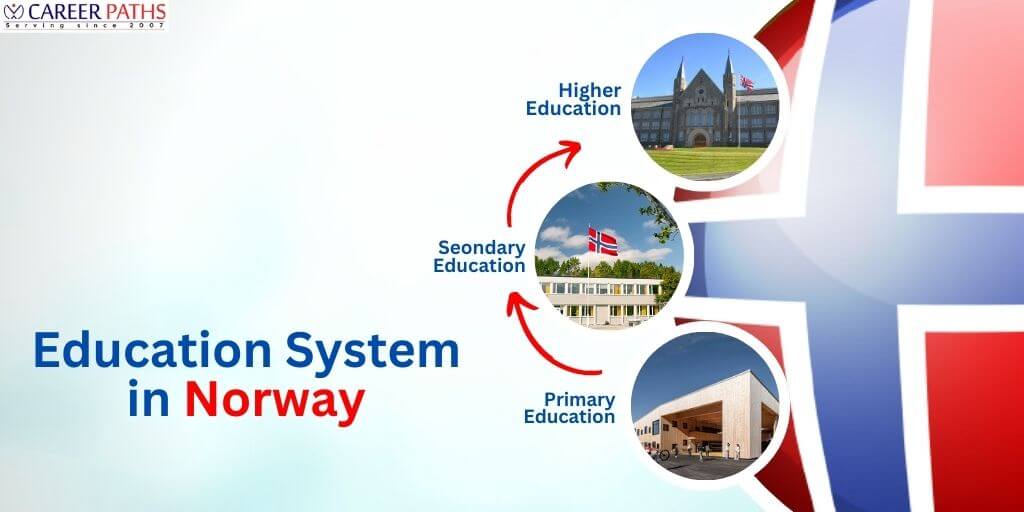
Numerous European nations are home to the top-ranked universities in the world. Norway, officially known as the Kingdom of Norway, is a Nordic country in Northern Europe. In terms of higher education, Norway offers a wide range of choices. Along with having a liberal government, a good level of living, safety, and security, Norway is well known for its outstanding international education system. International students can experience a completely new culture in Norway while living in a secure and beautiful nation. Children between the ages of 6 and 16 must attend school, according to Norway education law. Norway’s education system is separated into four tiers. Elementary, Lower secondary education, Upper secondary education, and higher education. Norway is in high demand when it comes to international degrees. Some Norwegian universities routinely hold a top spot in the rankings of the world’s educational systems. History of Education in Norway The Norwegian educational system has a long and complicated history. To understand the history of Norwegian education, we have to go back to 11 BC. Cathedral schools were built in Trondheim, Oslo, Bergen, and Hamar shortly after Norway became an archdiocese in 1153. Following Norway’s unification with Denmark in 1536, the old cathedral schools were converted into Latin schools. During that time, it was made mandatory for all market towns to have such a school. Reading instruction was made mandatory for all children in 1736. Later that year, ambulatory schools were established a few years later. Norway established the people’s school (folkeskole) in 1827. Afterward, the primary school became mandatory for 7 years in 1889 and followed by 9 years in 1969. The people’s school was abolished in the 1970s and 1980s, and the foundation school (Grunnskole) was established. Norwegian private schooling was available to students following the Independent Schools Act of 2003. However, in comparison to Norwegian public schools, there are very few. Level of Education in Norway Norway has some of the best schools and universities in the world. Norway gives value to education and believes everyone, regardless of socioeconomic status, should study. The Norwegian education system is divided into four parts: Elementary school, lower secondary school, upper secondary school, and higher education. The Elementary and lower secondary levels are compulsory for all Norwegian children which means all children aged 6 to 16 are required to attend elementary and lower secondary school. Prior to 1997, compulsory education in Norway began at the age of seven. Because most schools only offer one of the levels, students almost always have to change schools when they enter lower secondary school and upper secondary school. Elementary school Elementary schooling in Norway is known as Barneskole. The age when primary or elementary schooling starts is 6 to 13. The grades are accordingly 1 to 7. Students spend the majority of their first year of primary school playing educational games and learning social structures. In Grades 2 to 7, children were introduced to mathematics, English, science, religion, aesthetics, and music. Lower secondary school The second stage of the Norwegian education system is lower secondary school. Here, the age of schooling starts from 12 or 13 to 16. The grades are accordingly 8 to 10. Students can select one elective beginning in eighth grade. Upper secondary school The upper secondary school is called Videregående Skole. Here, the age of schooling starts from 16 to 19. The upper secondary schooling is three years but optional schooling in Norway. In Norwegian, students who have completed upper secondary school are referred to as Russ. Higher Education A variety of universities and colleges provide higher education in Norway. The higher education system generally begins with bachelor’s degrees, which last three years, followed by master’s degrees, which last one or two years, and finally doctorate degrees, which last about three years. Language in Norway Norwegian and Sami are the official languages of Norway. Norwegian is by far the most widely spoken language. Norwegian, like Swedish, Danish, and Icelandic, is a Germanic language descended from Old Norse. If Norway is your choice for study abroad but you are confused regarding the language issue then you need to know that almost 90% of Norwegians speak English. This is to inform you that as an English speaker, outside of Norway, you should have no trouble living or studying in Norway. International students in Norway Norway is one of the few European countries that has made a genuine commitment to welcoming a large number of international students. A large number of international students are drawn to Norway because of its excellent educational system at all levels. Since the end of the Covid-19 pandemic, the idea of studying abroad has grown in popularity. Norway is one of the best places to study if you want to study abroad. According to recent research, the number of foreign students in Norway has increased dramatically. The number of students enrolled in Norwegian higher education has steadily increased over the past few decades. There were approximately 272,500 students enrolled in higher education institutions in 2014, but by 2021, the number had increased to over 318,405. Most Popular Universities in Norway If you are an international student looking for a university to further your education, Norway can be a great option. Furthermore, Norway’s ranking in the QS World University Rankings is very good. In Norway, there are numerous prestigious universities. If you are an international student looking for a university to further your education, Norway is an excellent option. The followings are the top universities in Norway, along with their rankings: University Names in Norway Location in Norway QS Ranking (2023) Global Score (2023) University of Oslo Oslo 101 58.7 University of Bergen Bergen 207 42.7 Norwegian University of Science And Technology Trondheim 352 30.9 University of Tromsø The Arctic University of Norway Tromsø 454 26 UiT The Arctic University of Norway (UiT) Tromsø – – Norwegian University of Life Sciences (NMBU) Ås, Norway – – University of South-Eastern Norway (USN) Notodden – – University of Stavanger (UiS) Stavanger – – University of Agder (UiA) Grimstad – – BI

Education System In Hungary
Study Abroad from Bangladesh

Hungary Education system – History, Levels, University, Program

You can experience world-class higher education in Europe, with a diverse range of bachelor’s, master’s degrees and doctoral programs, and more. Many European countries are home to some of the world’s top universities. Hungary is a landlocked country in Central Europe. If you want to study abroad then Hungary will be a great option. For international students, Hungary is an exciting, diverse, and safe destination. Hungary has a lot of offers for you with some top universities, high quality of life, and low tuition fees. The government of Hungary mandates children aged three to 16. In Hungary, there are four levels of education. They are elementary or pre-primary education, primary education, secondary education, and higher education. Hungary has a high demand for foreign degrees and consistently ranks high in the global education rankings because of its good education system. History of Hungarian Universities Some Hungarian universities are the oldest in the world. in 1276, the first university of Hungary, the university of Veszprém was destroyed in the war and never came back into operation. Later, the University of Pécs was founded in 1367 and still is as popular as before. Later various leaders and noble personalities built various universities. In 1395, Sigismund, King of Hungary founded Buda University. Matthias Corvinus founded Universitas Istropolitana in 1465. Nagyszombat University was founded in 1635 and relocated to Buda in 1777, where it is now known as Eötvös Loránd University. Education Levels in Hungary Hungary is one of the best places to study as the tuition fees are relatively low in comparison to the rest of Europe. Furthermore, the living expenses are low in comparison to the rest of Europe. Let’s dig into the education system of one of the top nations. Early Childhood or Elementary Education Education or training for Hungarian students started from the age of three to 16. The kindergarten educates children aged 3-6 years for the upper levels of the education system in Hungary. Kindergarten education is mandatory beginning at the age of three for every child living in Hungary. Primary Education In Hungary, primary education is mostly provided in 8-year basic schools. After, passing the primary level students continue their mainstream studies in the secondary institution. Primary education in Hungary usually lasts for eight years which is for grades 1 to 8. However, the Hungarian primary education system is a bit different. It gives some options to the students. The 8-year primary education is the most common one but students can also do 4 or 6 years of education. Students mostly start their primary education from the age of 6 to 14. Secondary Education Secondary education in Hungary has a vast structure. After completing primary education for 4, 6, or 8 years, students continue their education to the next level. The secondary education students are aged mostly between 14 to 18. The high secondary schools are classified into three types: Gimnázium which means grammar school. This stage of education prepares students for higher education. In this stage, students are taught at least 2 foreign languages. Szakgimnázium offers secondary education completing exams. Szakközépiskola is a vocational school. It also provides an option to assist low-achieving primary school students to join the regular vocational school curriculum. Higher Education The Hungarian higher education system consists of universities and other higher education institutes that offer education curricula and related degrees up to the doctoral level, as well as research activities. Colleges and universities are the two types of higher education institutions. College education typically lasts four years, while university education lasts four to six years or a maximum of eight years with a doctorate degree. Language in Hungary Despite the fact that Hungarian is the local language of nearly 98% of people but most higher education courses are taught in English. Minority languages have grown in popularity in recent years, including German, Croatian, Romani, Slovak, Romanian, Serbian, and Slovene. University Names Location in Hungary QS World University Ranking (2023) University of Szeged Szeged 551-560 University of Debrecen Debrecen 651-700 Eötvös Loránd University Budapest 701-750 University of Pecs Pécs 701-750 Budapest University of Technology and Economics Budapest801-1000 801-1000 MATE Hungarian University of Agriculture and Life Sciences Budapest 801-1000 Szechenyi Istvan University (University of Gyor) Győr 801-1000 Corvinus University of Budapest Budapest 1001-1200 University of Miskolc Miskolc   1001-1200 University of Pannonia Veszprém 1001-1200 Óbuda University Budapest – Popular Program in Hungary Program Available in Hungary Approximate Tuition Fee Per Year Mechanical Engineering, Civil Engineering University of Miskolc University of Pannonia $ 7590.45 to $10,000 Computer Science University of Pecs University of Pannonia University of Miskolc $ 4,500.00 to $10,000 English, Archeology University of Pecs University of Pannonia Eötvös Loránd University $ 4,500.00 to $10,000 Architecture University of Pecs Óbuda University Szechenyi Istvan University (University of Gyor) $6,000 – $15,000 Business Administration Budapest Metropolitan University University of Pecs University of Pannonia $6,000 – $15,000 Hungary Online Degree Distance learning is one of the most popular higher educational methods. It is a technique that allows you to keep learning without shifting from one place to another. You can obtain one of the most prestigious degrees available online education in Hungary’s top-tier universities by completing your coursework just sitting in front of a laptop. All you need is a steadfast internet connection. For international students seeking higher education in Hungary, distance learning is a widespread choice. Distance learning in Hungary is one of the best options if you want to get a good degree without spending a lot of money. Best Online Universities in Hungary University Names Main Location Hungary University Type University of Miskolc Miskolc The largest university of Northern Hungary and Partially taught online University of Pannonia Veszprém Top institution and partially taught online Institute of Advanced Design Studies Budapest Partially taught online University of Szeged Szeged Public research university and partially taught online   Centre international de formation – Physical institute and partially européenne – CIFE   taught online EIT Food by FutureLearn Online Online Best Areas for International Students in Hungary Do you want to study in Hungary? Without a doubt, studying

Education system of New zealand
Study Abroad from Bangladesh

Education System of New Zealand – History, Levels, University, Program

Island nation New Zealand, is located in the western Pacific Ocean. New Zealand is well known for its exceptional international education system, in addition to having a liberal government, a high standard of living, safety and security, and beautiful scenery. While living in a safe country, international students can discover a new culture in New Zealand. The New Zealand government mandates primary and secondary schooling for children aged 6 to 16. The educational system in New Zealand is divided into three levels. They are Primary and intermediate schools, followed by secondary schools and tertiary education, which includes higher education. When it comes to foreign degrees, New Zealand is in high demand. On the global education ranking, it consistently has a high position. History of Education in New Zealand Before European settlers came, there was Māori education. The indigenous Polynesian people of mainland New Zealand, established educational institutions to teach traditional information such as songs, chants, tribe history, spiritual awareness, and knowledge of medicinal plants. It was group learning and cooperative teaching. Formal European-style schooling was first introduced in 1815. Later, schooling was well established in 1832 by the London Missionary Society missionaries. During that time, teaching was available in the Māori language. For a long time, the Bible was the only literary work used in the classroom. In the 1850s, a Mori trade school was founded to teach farming skills. Between 1815 and 1900, religious groups and native Americans were taught in the schools. Later, two Mori Party MPs supported encouraging Mori students to learn English. They also teach hygiene to lower illness and mortality rates among the Mori people. Due to the lack of a national education system, grammar schools and other private institutions were the first significant secondary education providers. In 1850, the Auckland Grammar School, the first grammar school in New Zealand, was formed. In 1868, the Auckland Grammar School Appropriation Act was formed. Schools were built by both provincial governments and religious organizations. The education system was established in northern provinces in 1857 under the authority of the Education Act. It had 45 schools by 1863. The Canterbury Provincial Council passed its first Educational Ordinance in 1857 and appointed a Board of Education in 1863. They had 84 school districts by 1873. Following the abolition of the provinces in November 1876, New Zealand formed a free, compulsory, and secular national state education system in 1878. Māori-medium education still exists in New Zealand. Later, the New Zealand education system went through some drastic changes and there were significant changes. Throughout time Kiwi education developed and improved immensely. Secondary schooling wasn’t covered in the previous acts. Hence, according to the 1977 Education Act, several secondary schools were introduced. This degree of knowledge was typically reserved for the rich elite in 1900. There were several styles of secondary education introduced in the early 20th century. It included technical high schools. In the middle of the 20th century, the compulsory school starting age was lowered from 7 years to 6 years in 1964. This level of education was reserved for the rich elite in 1900 who wished to attend college or pursue professional occupations. Education Levels in New Zealand The Kiwi culture is distinctive and diverse. There are people with various skills, religious convictions, ethnicities, socioeconomic statuses, and teaching and learning philosophies. The educational system and history reflect the same. New Zealand’s economy greatly benefits from international education. It has three tiers in its educational system. There are three divisions of education: Early childhood education, Primary and secondary education, and further education which includes higher and vocational education. Early Childhood Education The New Zealand government highly encourages early childhood education. Children who learn early tend to be more attentive in their primary and secondary education. Most children start their early childhood education from age 2 to 5. After they are 5 years old, they will be directly admitted to primary and secondary education. Although Early Childhood Education or pre-elementary education is not compulsory by the government, approximately 96.8% of parents in New Zealand admitted their children to attend early childhood education. There are different kinds of early childhood education institutes available in the education system of New Zealand. Kindergartens, Education and care services, Home-based education and care, and Parent-led services are some of them. Primary and Secondary Education The second level of education in New Zealand consists of primary and secondary schooling. In New Zealand, a citizen or a permanent resident child’s education in state schools is free from the ages of 5 to 19. The government has mandated that children from ages 6 through 16 must attend school. The level of education in New Zealand is known as Year. There are 13 Year levels in the schooling system of New Zealand. The primary education of your child begins from Year 1 to Year 8 which is around 5–12 years old. On the other hand, the secondary education of Kiwi children starts from Year 9 to Year 13. which is around 13–17 years old. There are different kinds of Primary and secondary education institutes available in the education system of New Zealand. Local schools, State, state-integrated and private schools, Māori-medium education, National Curriculum, and National Certificate of Educational Achievement (NCEA) are some of them. Further Education In New Zealand, tertiary or higher education is taught in universities, institutes of technology, polytechnics, private training facilities, industrial training organizations, and Mori education centers. Further education is from undergraduate degrees to doctorate degrees based on programs. All university instruction was centralized under the University of New Zealand until 1961, with university colleges spread out around the nation. Over time, the colleges evolved into universities in their own right that grant degrees. Language in New Zealand More than 95% of Kiwi people speak English as their first language. They have a unique accent which is called New Zealand English. Māori now exists as a community language as after World War ll, Māori were discouraged from speaking in all public places. Most Popular Universities in New Zealand

higher education in france
Study Abroad from Bangladesh

Education System in France – History, Levels, University, Program

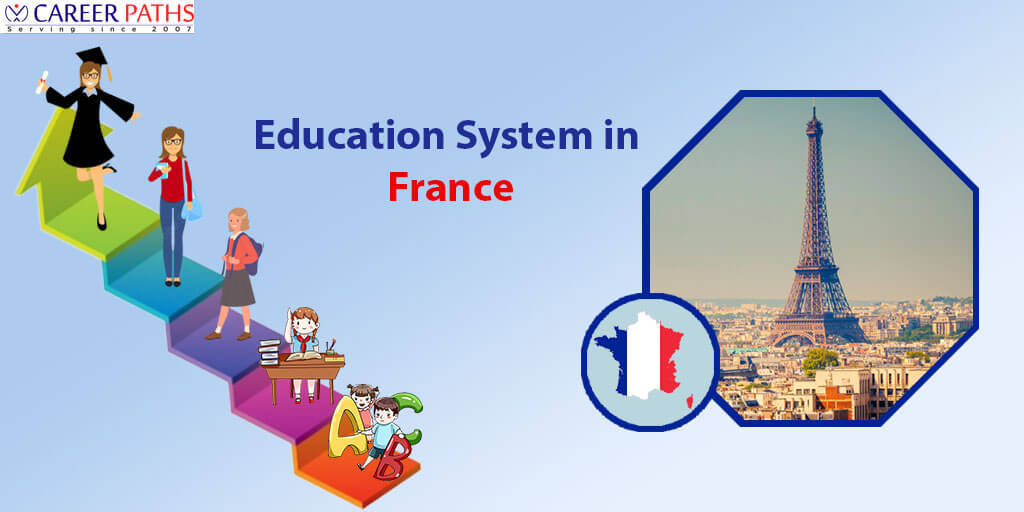
Along with having a liberal government, a good standard of living, security, and a stunning landscape, France is well known for its outstanding international education system. International students can experience a completely new culture while residing in a safe nation. On a global scale, France is a country that raises higher education to an exceptional level. The majority of universities in France provide excellent scholarships to students from abroad. French universities provide a wide range of outstanding English-taught programs in a number of specialties. The French educational system is divided into three basic parts. They are Primary school, Secondary school, and high school and Higher education. History of Education in France The educational system in France has a long and complicated history. We have to look back to the Roman Empire to know the history of French education. In France, there were some small schools where working-class children of both genders enrolled to have better knowledge of religion. However, mainstream schooling and education were seen continuously in some southern French towns, from the later Roman empire till the early Middle Ages. Later, during various revelations and developments, the educational system in France was updated and restructured. The history of Education in France is highlighted below: Roman Empire Before the Roman empire, education in Gaul was famous and it was like a domestic task. Later on, patricians in France established Latin schools. Middle Ages Charlemagne, a medieval emperor, influenced and developed the education sector immensely. He is also known as the father of education in France. He established schools and a number of scriptoria which are the centers for book-copying and monastic institutions in France between 742/743–814. Since the eighth century, church schools have grown.One of the first institutions in Europe was the University of Paris, which may have been founded in the early 1150.From the 12th century onward, universities were formally founded. Early Modern Era Several Catholic organizations founded institutions in the early modern era. Universities in France expanded concurrently. According to Louis the Great or the Sun King of France in 1698, parents were ordered to send their children to village schools until they turned 14 years old. French Revolution The French Revolution brought a significant change in the history of education. The levels of literacy and education rose high during the course of the 18th century. People were seen as interested in reading newspapers and journals. In the middle of the 18th century. Places like reading groups, coffee shops, and Masonic lodges increased. Debate and discussion forums were also built and increased during that time period. Four categories; law, medicine, sciences, and humanities were introduced at the University of Paris. Later, there were many developments seen in the history of education in France in the late 18th century. The 18th century was a milestone for education. After almost a decade of closures, in 1802 the main secondary education establishments were. French, Latin, ancient languages, history, rhetoric, logic, music, mathematics, and physical sciences were introduced during that era. French Educational Growth in the 19th Century In the 19th century, France’s educational sector saw noticeable growth. The highest growth rate was seen in the schooling system. The quality of study and teaching was improvised. In late 1800, secondary education for girls came to light. At the end of the 1890’s there some 36 institutions were built. Later, in the early 1900s, secondary education became free and made more accessible to the working class. 20th Century Different primary schooling, and vocational schools were introduced and improvised all over France. Child, science, and society were the three factors that influenced 20th-century education in France. Level of Education in France In France, there are various divisions within the highly centralized system of education. The French educational system is divided into three basic parts. They are Primary school, Secondary school, and high school and Higher education. Besides the three important levels of education in France, pre-schooling is available for children between the ages of two or three and six to prepare them for the primary level of schooling. In France, compulsory education starts at age six. Younger children of ages 6 to 7 concentrate on learning the French language and mathematics. Primary Schooling in France Children aged six to ten or eleven in France attend elementary or primary schooling. Here, they must finish their five years of education. In the early stage of primary education, children learn some fundamental knowledge in areas like the French language, mathematics, physics, and the arts, to mention a few, as well as writing and reading skills. There are both public and private primary schooling in France. Students stay in elementary school until they are 10 or 11 years old. The grades are known as the followings: CP (Cours préparatoire) – Ages 6 to 7 CE1 (Cours élémentaire 1) – Ages 7 to 8 CE2 (Cours élémentaire 2) – Ages 8 to 9 CM1 (Cours moyen 1) – Ages 9 to 10 CM2 (Cours moyen 2) – Ages 10 to 11 Secondary Schooling in France Secondary schooling in France is the most important part in the education system of the country. There are both public and private secondary schooling in France. Secondary schooling is compulsory in France. There are middle and high secondary schooling in France. By law, all children have to go to school until they are 16. Between the ages of 11 and 15, students in France attend a middle school (collège). The vast majority of students stay in school beyond this, continuing their education until the age of 18. Students spend the last three years of secondary education at a high school (lycée). There are three types of lycée in secondary schooling in France. Children in the first four years of secondary education, from the ages of 11 to 14, attend middle school. Children between the ages of 15 to 18 can attend a high school that offers a three-year course of further secondary education. Higher Education in France France’s higher education is recognized worldwide. Numerous excellent English-taught programs

Denmark Education System
Study Abroad from Bangladesh

Denmark Education System – History, Levels, University, Program

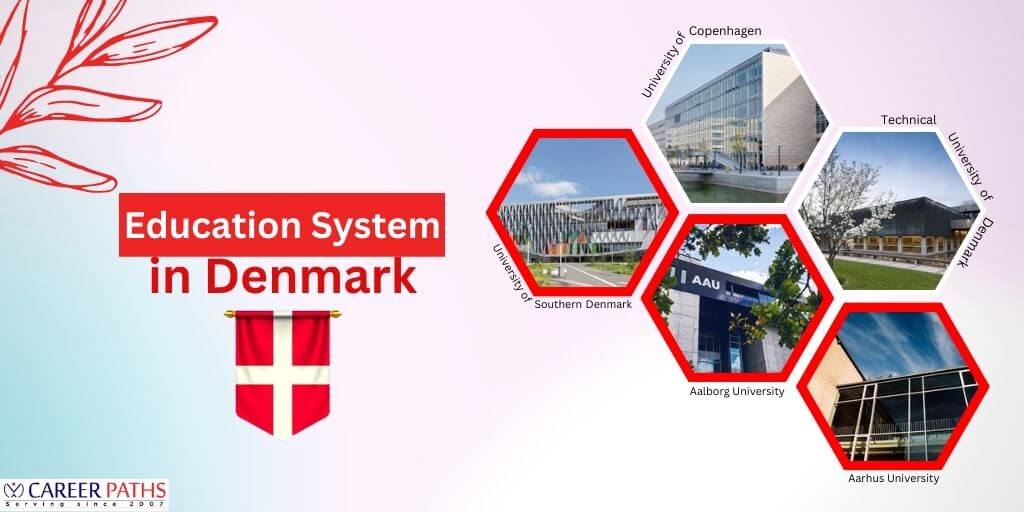
Denmark is the smallest of the Nordic countries however the education system in Denmark is top notch. The Danish education system is similar to the Norwegian education system. Aside from its liberal government, high standard of living, security, and beautiful scenery, Denmark is notable for its exceptional international education system. International students can experience a completely new culture while studying in one of the safe countries. The Danish education system with the literacy rate approximately 99% for genders, influences the nation’s economic growth, increases global competitiveness, and the development of innovative cultures, among other things. All of the growth in Denmark is made possible for the foundation of the Danish education system. Let’s first explore the Danish education system. It is structured into three main parts; primary and lower secondary education, secondary education and post-secondary education. Denmark has a compulsory education system which starts for children aged 6 to 16. History of Education in Denmark Education is regarded as one of the pillars of the success of any nation. The educational system in Denmark has a long and complicated history. We have to go back to the 12th century to understand the history of Danish education. Roman Catholic Church In the early Middle Ages, cathedral- and monastery schools were founded by the Roman Catholic Church which still exist. 12 Century Afterwards, with the changing times, there were seven schools founded in between the 12th and 13th centuries which still exist. Reformation Danish education achieved victory following the Reformation. In 1536, the main goal was to help students prepare for theology to read, write, and speak Latin and Greek. Elementary Schools Elementary schooling became popular in 1721. There were some 240 rytterskoler which are also known as “cavalry schools’, established. Furthermore, the religious movement of Pietism, in the 18th century, demanded literacy. It also promoted the need for public education. Public Schools The Folkeskole, which is “public primary school,” the government-funded primary education system was formally established in 1894. Various steps were taken to improve the Danish education system to meet the needs of industrial society. Middle Schools In 1903, the Mellemskole which is ‘middle school established. That time the education levels in Danish middle school were from grades 6-9. Mellemskole was later replaced by the realskole. Later, in 1975, the realskole was abolished and the primary education (Folkeskole) was transformed into another system in which students attend the same schools based on their academic ability. Denmark offers a range of universities, university colleges with bachelor’s degrees, master’s and doctorate degrees. Denmark’s University of Copenhagen named in top 10 oldest universities in Europe. Founded in 1479, the institution is one of the most prestigious universities in Denmark and is also recognised worldwide. Education Levels in Denmark Education makes a significant economic contribution to Denmark. In Denmark, ten years of compulsory education are required from all kids. Children must begin school when they reach the age of six. Its educational system is structured into three major levels. The three main categories are: Primary and lower secondary education, secondary education and post-secondary education. Primary and lower education Most of the kids in Denmark attend pre-schools to prepare themselves for the primary level of education. Children aged one to six go to preschool or kindergarten or daycare centers after which the compulsory education begins. The folkeskole includes the entire compulsory education period which includes primary and lower secondary education, secondary education and tertiary education of Denmark. Kids go to folkeskole from the age of 5 or 6 to the age of 15 or 16. The folkeskole, compulsory education includes primary and lower secondary Danish education. Secondary education After the compulsory Danish education, the secondary education starts. Secondary education generally lasts for two to four years. The children aged 15 or 16 to 18 or 19 attend secondary education. However, secondary education in Denmark is not compulsory, but it is usually free, and students can choose from a variety of subjects. Post-secondary education Danish higher education is available at a variety of institutions and in a variety of subjects. It provides various types of education. Denmark has eight state-recognized and funded universities that provide research-based education and grant bachelor’s, master’s, and doctoral degrees. Other than that, Denmark has nine higher education institutions that teach architecture and the arts. There are eight university colleges in Denmark that are only located for awarding professional bachelor’s degrees. There are many other institutions and degrees available in Denmark which it is one of the top choices among students in terms of higher education. Language in Denmark Danish is the official and commonly spoken language of Denmark. However, there are several minority languages spoken in Denmark. Danish children are taught English from an early age however, students must teach a second foreign language, German or French, in their 7th to 10th year in Denmark. About 86% of Danes speak English as a second language. Can you survive without knowing Danish in Denmark? The answer will be, you do not need to speak Danish. Many foreign students visit Denmark as their higher education destination. Danish higher education institutions provide a wide range of English-taught programs. Furthermore, because almost all Danes speak English, it will be very simple for you to communicate with others. International students in Denmark Denmark are one of the best places in the world to pursue higher education degrees. From the low, even free tuition fees are offered by the Danish government for the students. There are special scholarships offered for students from the EU/EEA and Switzerland to study in Denmark. Popular Universities in Denmark The education sector in Denmark is thriving and expanding vastly. The following are some of Denmark’s top universities: University Names in Denmark Location in Denmark QS Ranking (2023) Global Score  (2023) University of Copenhagen Copenhagen 82 64.1 Technical University of Denmark Kongens Lyngby 104 58 Aarhus University Aarhus 161 48.6 Aalborg University Aalborg 330 5QS Stars 32.5 University of Southern Denmark (SDU) Odense 347 31.1 Copenhagen Business School Copenhagen     Roskilde University Trekroner    

China Education System
Study Abroad from Bangladesh

China Education System – History, Levels, University, Program

China, officially known as the People’s Republic of China (PRC), is an East Asian country. China’s educational system is highly developed with a focus on science, technology, engineering, and mathematics. China has always been a popular destination for international students and is the most popular country in Asia for international students. However, it is now a popular destination for Anglophone African students worldwide, and it is home to the world’s second-largest international student population as of a recent survey. In terms of overall education results, China has 26 universities among the top 200 in the 2022 Academic Ranking of World Universities. China is notable for its exceptional international education system, in addition to its liberal government, high standard of living, security, advanced technology, and beautiful scenery. Let’s dig into the education system of one of the top nations which has four different stages in it. They are a primary school, junior secondary school, high school, and higher education curriculum. History of Education in China 16th century The origins of the formal Chinese education system can be traced back to the 16th century. Before that only a few elite Chinese got the privilege of studying. 19th century In the 18th century, the government actively promoted public education. Some institutions solely prepared students for the examinations during the 18th century. Chinese educational reformation (20th century) In 1911, there were European, American, and Japanese education models based on the Chinese educational system. In the early years of the 20th century, education was centered on increasing literacy. The literacy rates in 1949 ranged between 20 and 40%. The communist government emphasized improving the literacy rate. During the first sixteen years of communist rule, elementary school enrollment tripled, secondary school enrollment increased drastically and college enrollment more than quadrupled. In 1985, the Chinese authorities imposed a nine-year compulsory education and formed the State Education Commission. There were so many significant changes and new rules built to improve education in China. The pre-shooling was first introduced in the same year. In the 1900s, the percentage of school admission increased largely. In 1985, schooling for special children was introduced which was a very significant step for China’s education system. Schooling history in China In 1985, pre-schooling was introduced which began at the age of three. It was a home tutoring and privately taught system in the beginning, later gradually institutes were built. The history of primary schooling is very significant for China’s education system. In 1985, approximately 96 percent of primary school-age children were enrolled. By that time there were more than eight hundred thousand primary schools. This enrollment figure was higher than in the late 1960s and early 1970s. Secondary education has a vast, deep history. During the Cultural Revolution, the rapid expansion of secondary education caused serious problems. After introducing vocational and technical education in the 1960s to 70’s the notion of secondary schooling was dropped. By 1986, secondary education again took its height when compulsory education was introduced. Early days of Chinese Higher Education During the early stages of the Cultural Revolution from 1966 to 1969, all the Chinese universities were closed and students joined Red Guard Organizations. Later, in the 1970s enrollments were reduced from pre-Cultural Revolution levels. Gradually by 1975, the level of Chinese higher education improved. Education Levels in China Education plays a significant role in the economic contribution of China. In China, a nine-year compulsory education is required for all children. Children in China must begin schooling from the age of six. The Chinese education system is structured into three major levels. The three main categories are Primary schooling, Secondary education which has two routes, and higher education which includes the top level of education degrees. The Chinese educational structure includes six years of primary schooling, three years of lower secondary school, three years of upper secondary school, and four years of the standard university curriculum. Primary Education Before starting primary education, students start their preschool education at the age of 3. However, pre-schooling is not compulsory but most of the children are sent to preschool so that they are well prepared for the first level of education. Primary education in China starts from the age of six till children reach their 12th. According to Chinese law, primary schools have to be tuition-free and reasonably located for the convenience of the children. Most of the primary schooling is for 5 years however, in some places the primary schooling lasts for 6 years too. In primary schooling, students are taught Chinese, mathematics, physical education, music, and drawing and they are made prepared for their secondary schooling. The international language English is taught from the 3rd grade. Secondary Education In China, secondary education lasts for six years and has two routes: junior schooling or middle secondary schooling and senior secondary or high school education. Junior School: China’s senior secondary education commonly lasts for three years. Students who have completed six years of primary school will typically continue three years of academic study in middle schools, as required by the Compulsory education law in China. There will be a Senior High School Entrance Examination that evaluates the students at the end of their junior secondary schooling. After junior secondary education, students are allowed to choose whether they can continue their education to the next level or not. However, there will be a Senior High School Entrance Examination commonly known as Zhongkao to evaluate students after Junior secondary education. High School: A senior school graduate in China is considered an educated person in China. An annual National College Entrance Examination (NCEE) commonly known as Gaokao is held to evaluate students after they are done with secondary schooling and ready for their college level. Higher Education The NCEE selects students for the higher education system in China. Chinese higher education is available in a variety of institutions and subject areas. It offers a variety of educational opportunities. According to a 2021 study, China has more than 2,700 universities that offer research-based education and award bachelor’s, master’s,

Australian Education System
Study Abroad from Bangladesh

Australian Education System – History, Levels, University, Program

Along with having a liberal government, a good standard of living, security, and a beautiful landscape, Australia is well known for its outstanding international education system. All enthusiastic international students can experience a completely new culture while residing in a safe nation. The Australian government requires that children begin their education at the age of four. The education system in Australia is divided into four levels. They are as follows: preschool, primary education, secondary education (middle and high schools), and tertiary education (higher education). When it comes to international degrees, Australia is in high demand. It is consistently ranked high in the world education rankings. History of Education in Australia Education in Australia dates back to the 18th century. There were no schools or colleges in Australia prior to the 18th century. Elementary schooling began in the early 18th century and eventually expanded to high schools. Grammar schools were first seen in a few areas of Australia in 1813. Later that year, in 1831, the Australian college was established. The University of Sydney was established in 1850 as Australia’s first university. Colleges arose shortly after. The year 1889 is significant because it marks the formation of the majority of structures and foundations for future development. The Grammar School Act of 1860 was enacted in Queensland to close education gaps in rural Australia. Later, between 1880 and 1900, free, secular, and mandatory education systems were implemented. Level of Education in Australia Education has a major economic contribution to Australia. Its educational system is divided into four tiers. Preschool, primary education, secondary education, which includes middle and high schools, and tertiary education, which includes higher education, are the four categories. Primary Education Primary Education includes Preschool or pre-elementary programs. The Australian Government has encouraged parents to enroll their children from 4 years of age in kindergarten. Primary education runs from Kindergarten or Preparatory through to Year 6 or 7. There are daycares or kindergartens where children get to learn their 1st education and prepare for the primary level of education in Australia. Moreover, pre-schooling differs from state to state. Preschool programs in some states are referred to as Pre-Prep. Australia has more than 12,000 registered schools operating actively all over Australia. Government institutions offer education in primary schools for free; however, many of the schools cover certain costs. In Australia, the academic year runs from January to December. Secondary Education In Australia, high schools and colleges are other names for secondary schools. Every Australian state and territory has different secondary schools, but they typically educate students from Years 7 through Year 10. Year 10 to Year 12 marked the end of higher secondary education. Tertiary Education Australia is home to more than 42 universities, including public and private and international institutions. Monash University in Melbourne is the largest university in Australia. For international students, Australian higher education is the most demanding among international students. Most institutions place a strong emphasis on the in-depth research and study of their pupils. Bachelor’s degrees, Master’s level, and the highest level of education doctorate are in Australia’s tertiary education. Language in Australia Legally, there is no official language in Australia. The majority of people speak English. 72% of the population speaks English exclusively at home, according to a recent census. Vietnamese (1.3%), Mandarin (2.7%), and Arabic (1.4%) come after the English language. Most Popular Universities in Australia The Australian education sector is thriving and expanding day by day. The following are some top universities in Australia. Australian Universities Location QS World University Ranking (2023) Australian National University (ANU) Canberra 30 University of Melbourne Parkville 33 University of Sydney Sydney 41 University of New South Wales (UNSW Sydney) Sydney 45 University of Queensland Brisbane City 50 Monash University Melbourne 57 University of Western Australia Perth 90 University of Adelaide Adelaide 109 University of Technology Sydney Haymarket 137 University of Wollongong Wollongong 185 Popular Program in Australia Program Available In Approximate Tuition Fee Nursing, Medicine University of Technology Sydney University of Sydney $20,000 to $50,000 Computer Science, Technology University of Western Australia University of Adelaide $45,429 to $90,000 Engineering, Architecture University of Technology Sydney University of Wollongong $27,689 to $40,000 Business Australian National University University of Sydney University of Melbourne $40,000 to $90,000 Australian Online Degree Online education is one of the simplest methods for you if you’re thinking about enhancing your abilities and experience. One of the most often used educational systems among students is online education. It is a method by which you can keep studying without changing your place. You can earn one of the most prestigious degrees through online education by just doing classes while seated in front of a laptop. A strong internet connection is all you require. Higher education in Australia is available through distance learning, which is well-liked by foreign students. If you want a good degree without spending a lot of money, distance learning is one of your best possibilities. There are a ton of worthwhile short and long courses available for distance learning in the Australian education system. Since the global Coronavirus outbreak, the idea of distance learning in Australia has become much more popular. Best Online Universities in Australia University Names Main Location University Type Charles Darwin University Darwin Public University and 100% Online Charles Sturt University Multi-campus located in New South Wales, Canberra and Victoria Public University and 100% Online CQUniversity Queensland Public University and offers online education Deakin University Victoria Public University and offers online education Ducere Global Business School Melbourne Offers online education Edith Cowan University Western Australia Offers online education Best Areas for International Students in Australia Are you looking to study abroad in Australia? You will undoubtedly encounter a very amazing environment and study at famous institutions with excellent academic programs, and the best urban life and breathtaking landscapes in Australia. A list of Australia’s top universities according to the Academic Ranking of World Universities would be a good place to start. Look at the list of Australia’s top international students’ favorable cities below: Melbourne. Top University: Monash University

Scroll to Top