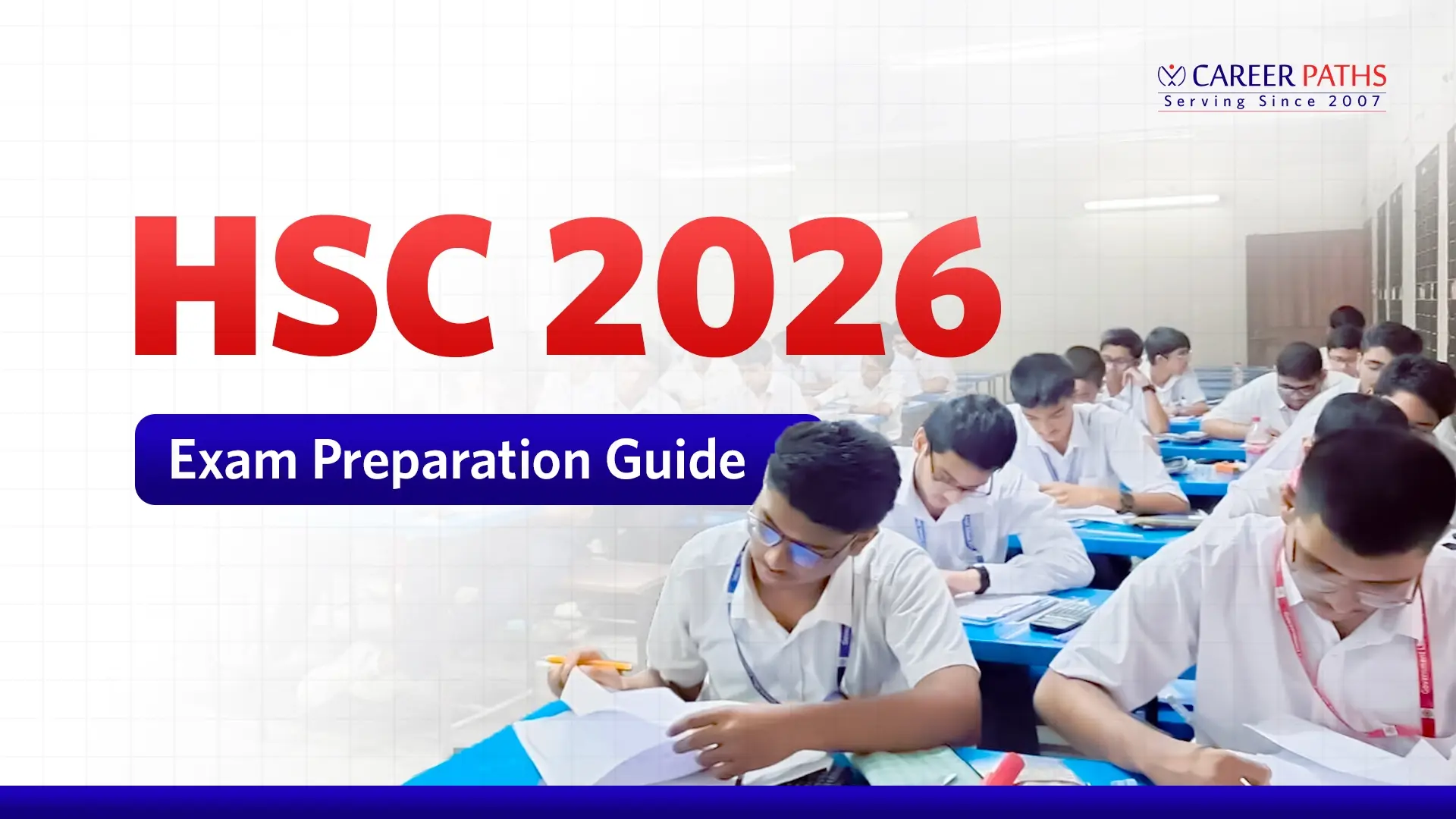
The HSC 2026 examinations mark one of the biggest milestones in a student’s academic life in Bangladesh. According to the official routine published by the Dhaka Education Board on 22 April 2026, the written exams begin on 2 July 2026 and continue until 8 August 2026, followed by practical exams. Over a million students from all education boards will sit for this exam together. This guide brings together verified exam dates, exam day rules, and simple preparation tips, so every HSC 2026 candidate can walk into the exam hall feeling ready and confident.
HSC 2026 Exam Schedule at a Glance
All eleven education boards of Bangladesh, including the nine general boards, the Madrasah Board, and the Technical Education Board, follow one unified national routine. Here is what has been confirmed officially so far:
- Written (theory) exams: 2 July 2026 to 8 August 2026
- Practical exams: held after the theory exams, to be completed by 15 August 2026
- Exam shifts: morning shift from 10:00 a.m. to 1:00 p.m., and afternoon shift from 2:00 p.m. to 5:00 p.m.
- First exam: Bangla First Paper, on 2 July 2026
- Results: expected to be published in October 2026
Subject-wise exam dates may differ slightly depending on your group or education board, so be sure to verify the official routine on your own board’s website. It’s also a good idea to keep a printed copy of the routine at your study desk and highlight or mark each exam date for easy reference.
HSC Exam Routine 2026
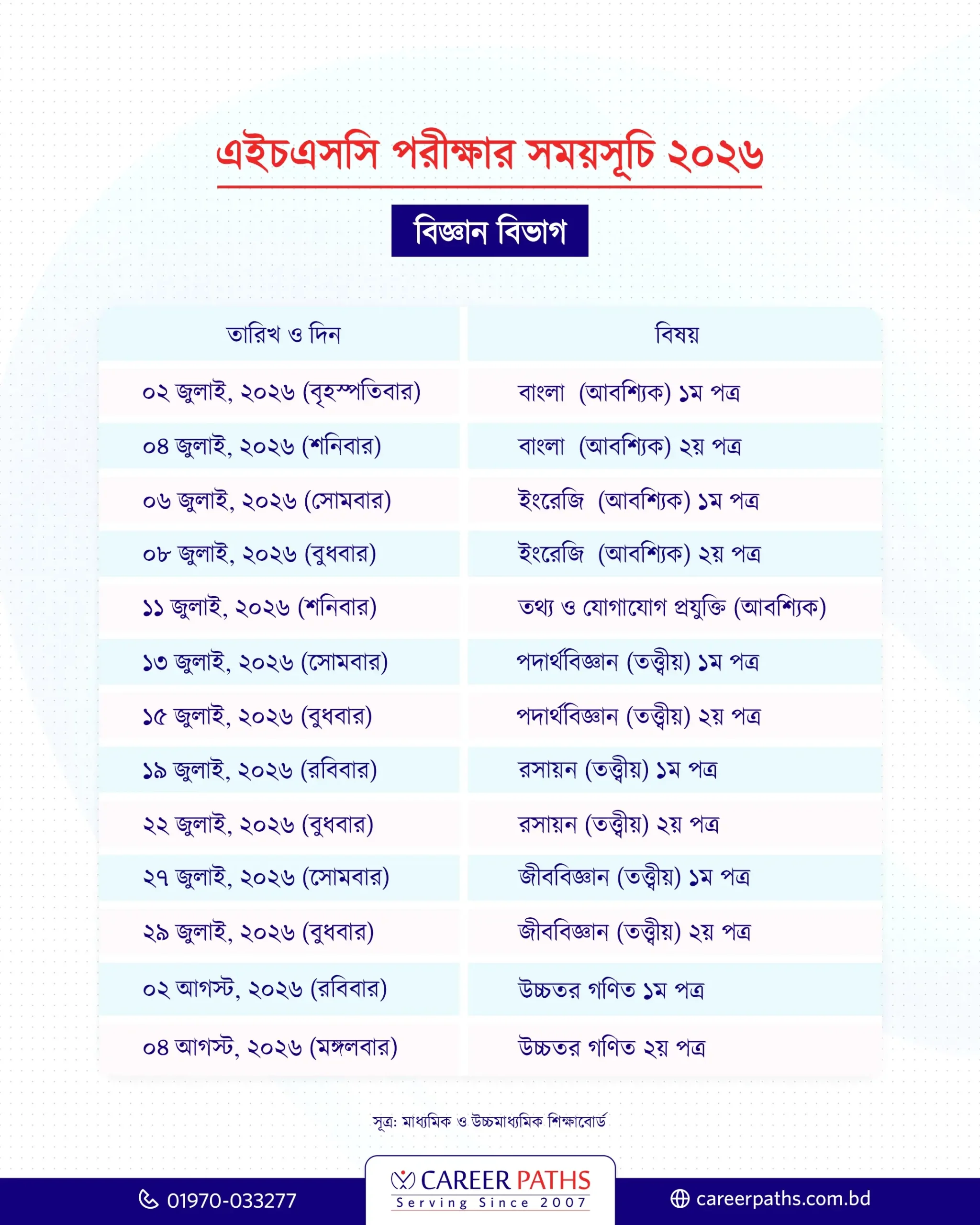
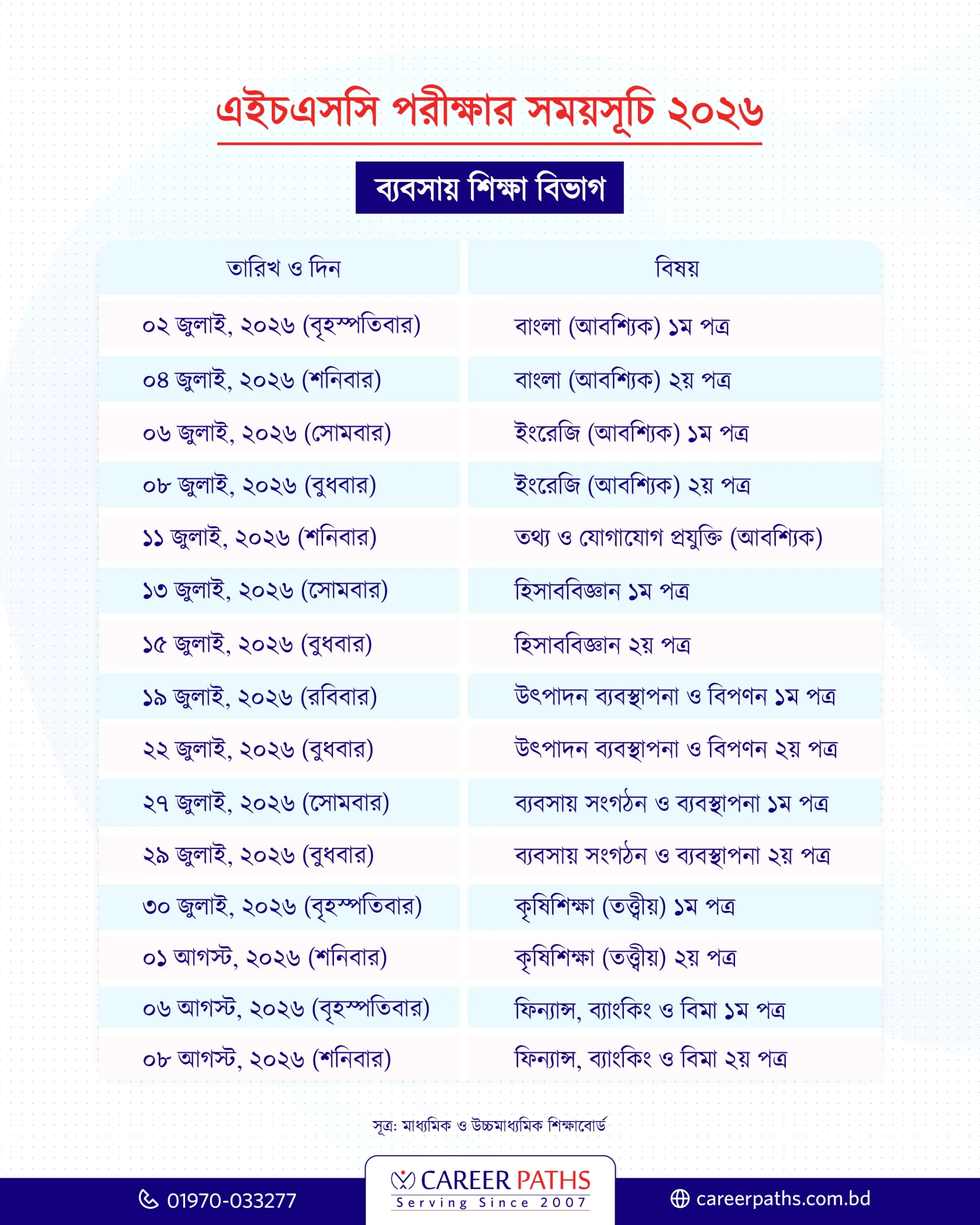
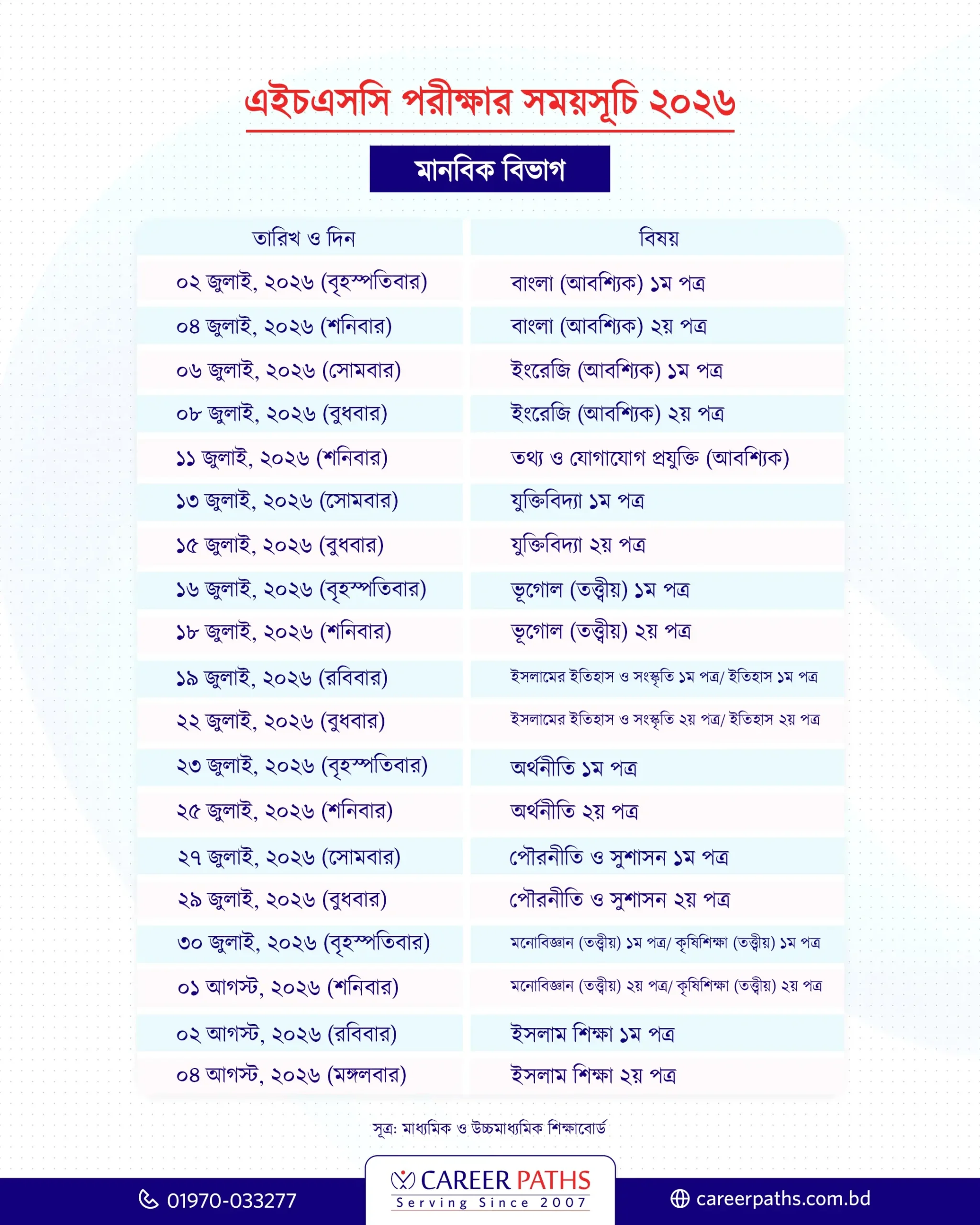
HSC Exam format
This year, HSC exams follow the full syllabus, with full marks and full duration, since there is no short syllabus like in some earlier years. Understanding the format in advance helps you manage your time well inside the exam hall.
- Each written paper has a Multiple-Choice Question (MCQ) part worth 30 marks, to be completed in 30 minutes
- The Creative Question (CQ) or written part is worth 70 marks, with 2 hours and 30 minutes given
Both parts run together in one continuous 3-hour sitting, with no break in between - The subjects that have practical marks are assessed with 75 marks for the theory examination (MCQ: 25 marks + CQ: 50 marks) and 25 marks for the practical examination. The practical exam also includes a short MCQ section and a hands-on practical or creative task.
Since every subject now carries full marks, treat each paper, including practical, with equal importance. Do not assume any part of the syllabus is optional this year.
How to Build a Realistic Study Plan
With the full routine now available, you can plan your revision subject by subject instead of studying everything at once. A few simple habits make a real difference in the weeks before the exam.
- Use the exam routine to set a daily revision target for each subject, working backwards from your exam date
- Give extra time to the chapters or topics you find difficult, instead of repeating what you already know well
- Practice previous years’ board questions and solve MCQs every day to build speed and accuracy
- Keep your practical notebooks, charts, and lab work updated, since practical marks count towards your final grade
- Revise in short, focused sessions rather than long, tiring ones, and review what you studied the next morning
- Leave the last few days before each exam for revision only, not for learning new topics
Subject-Wise Preparation Tips
Your preparation approach should match your group and subject combination.
- Science group: divide your time fairly between theory-heavy subjects and calculation-based ones such as Physics, Chemistry, Higher Math, and Biology; practice numerical problems daily rather than only reading formulas
- Business Studies group: focus on understanding concepts in Accounting and Finance rather than memorizing them, since most questions test application
- Humanities group: practice writing full answers within the time limit, since these papers often carry more descriptive content
- Bangla and English papers: read sample answers and previous years’ creative questions to understand how marks are distributed across each part
- For every subject, revise the marking scheme so you know how much time and detail each question deserves
Looking After Your Health and Mind
Good preparation is not only about books. Your body and mind need care, too, especially during a long exam season that lasts over a month.
- Sleep at least seven to eight hours a night; a tired brain forgets faster than it learns
- Eat regular, simple meals, and avoid skipping breakfast on exam mornings
- Take short walks or breaks between long study sessions to stay fresh
- Talk to family, friends, or teachers if you feel anxious; sharing worries often makes them lighter
Avoid comparing your exam preparation with others. Everyone has their own learning style, and regular, consistent study habits are often more effective than rushing to cover everything at the last minute.
Documents and Items to Carry on Exam Day
A small mistake with documents or restricted items can create unwanted stress, or worse, cost you your exam. Keep this checklist handy before you leave home each day.
- Admit card and registration card are required every single day of the exam
- A simple, non-programmable scientific calculator and an ordinary wristwatch, where your subject allows their use
- Mobile phones, smartwatches, and programmable calculators are strictly banned inside the exam hall, even if they are switched off
- Arrive at least 30 minutes before the exam starts
Keep your admit card in a safe folder, away from rain or damage, since it has to last you through the entire exam period.
Exam Day Do's and Don'ts
Following exam hall rules carefully protects the hard work you have put in over the past two years.
- Do carry only your admit card, registration card, and allowed stationery
- Do check your seat number, room number, and centre details a day before each exam
- Do read each question fully before answering, and attempt the MCQ section first to secure those marks early
- Don’t bring mobile phones, smartwatches, or any unauthorized paper or device into the hall
- Don’t panic if a question feels difficult; move on, attempt what you know, and come back to it later if time allows
- Don’t leave the centre early without confirming with the invigilator that you have submitted everything required
Common Mistakes to Avoid
- Studying only from guidebooks while ignoring the original textbook, which is where most board questions are based
- Leaving practical preparation for the last few days, even though it carries real marks
- Skipping revision of earlier chapters while focusing only on recent ones
- Carelessly entering your roll number, registration number, or subject codes on the answer sheet.
- Ignoring sleep and meals during the exam period lowers focus during the next paper
Final Word
The HSC 2026 routine is now confirmed, and the months ahead are about steady, planned effort rather than last-minute pressure. Follow the official routine from your board, stick to a realistic study plan, and take care of your health along the way. Your HSC result will also matter for whatever you choose to do next, whether that is higher studies in Bangladesh or higher studies in abroad, so prepare well and best of luck for your exams.