
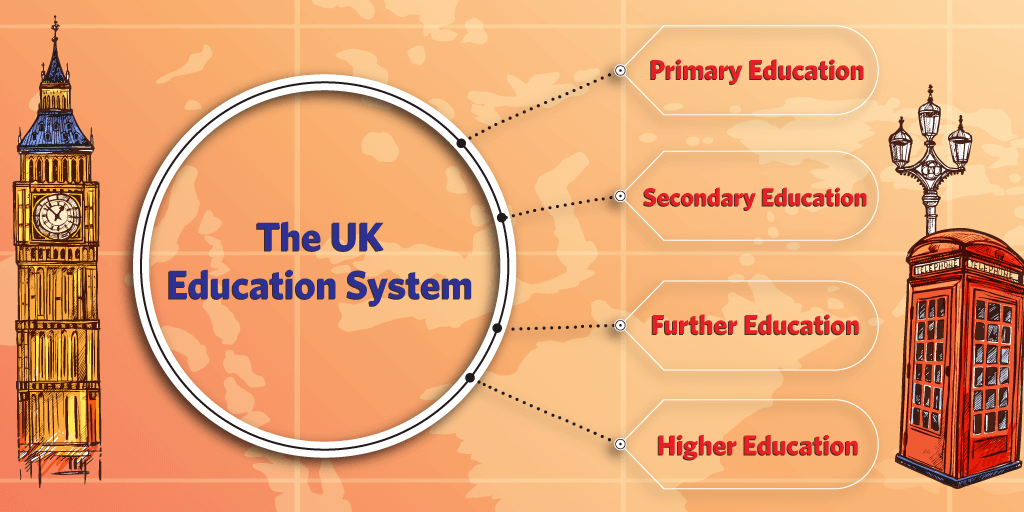
The UK Education System
The education system in the UK consists of four main parts; primary education, secondary education, further education, and higher education. Children in the UK have to legally attend primary and secondary education which runs from about five years old until the student is sixteen years old. After completing secondary school, students can choose to continue their education at a further education college or go to university. Further education colleges offer courses such as A-levels and BTECs, while universities offer undergraduate and postgraduate degrees. The UK has a wide range of universities, both private and public, which are ranked among the best in the world. If you want to study in the UK, you will need to meet the requirements of UK Visas and Immigration (UKVI). You will also need to have a valid passport and enough money to support yourself during your studies. Department for Education in the United Kingdom The Department for Education is the government department responsible for education and children’s services in England. The DfE’s headquarters are at Sanctuary Buildings in Westminster. The department was formed on 12 May 2010 by the incoming Cameron ministry, merging the Department for Children, Schools, and Families and the Department for Innovation, Universities, and Skills. It was renamed the Department for Education in 2016, when responsibility for skills and higher education was transferred to the newly created Department for Business, Energy, and Industrial Strategy. Justine Greening was appointed as Secretary of State on 14 July 2016 by Theresa May, replacing Nicky Morgan who had served in the role since July 2014. Damian Hinds was appointed Minister of State for Education on 8 January 2018, replacing Anne Milton. The department is responsible for education, apprenticeships and skills, children’s services, higher and further education policy, and equalities. The department for Education has been accused of having a heavy focus on academies and free schools, and of neglecting other types of state-funded schools. Education Stages There are mainly 4 education stages in the United Kingdom. Let’s explore each one step-by-step. Primary Education Children in the UK have to legally attend primary education which runs from about five years old until the student is sixteen years old. Primary education is free for all children in the UK and it is compulsory. The curriculum at primary school is designed to prepare students for secondary school. Secondary Education After completing primary education, students in the UK move on to secondary education. Secondary schools are also free for all students in the UK. The curriculum at secondary school is designed to prepare students for further education or employment. Further Education Further education includes any type of education after secondary school. Further education is not compulsory in the UK, but many people choose to study at this level to improve their job prospects. Higher Education Higher education is the final stage of formal education in the UK. It usually refers to university-level study, but can also include other types of tertiary education such as college or vocational training. Higher education is not free in the UK, but there are many scholarships and financial support options available to students. History of the British Education The British education system has a long and complex history. It has been subject to numerous reforms and changes over the years, often in response to political and economic factors. The earliest schools in Britain were founded by the Romans, who established a system of primary and secondary education. However, this was largely abandoned after the Roman Empire fell in the 5th century. During the early Middle Ages, education was largely the preserve of the Church. Monasteries and cathedrals ran schools that taught reading, writing, and arithmetic. However, few other subjects were covered. The first secular schools were established in the 12th century, with the founding of grammar schools. These were open to boys from all social backgrounds and provided a more comprehensive education than the Church schools. The Reformation of the 16th century led to a further expansion of education, with the establishment of Protestant schools and colleges. However, education remained largely the preserve of the elite and the wealthy. The Industrial Revolution of the 18th and 19th centuries led to a dramatic increase in the number of factory workers and a corresponding need for basic literacy and numeracy skills. As a result, a number of ‘ragged schools’ were set up to provide free education to the poorest children. The 20th century saw a number of significant changes to the education system. The 1902 Education Act established free, compulsory education for all children aged 5-13. Higher education was also expanded, with the creation of a number of new universities. The education system was again reformed in the 1970s, with the introduction of comprehensive schools. These replaced the previous grammar school/secondary modern split and aimed to provide a more equal education for all. Today, the British education system is once again undergoing reform. The 2010 Education Act introduced a number of changes, including the introduction of academies and free schools. These reforms are intended to improve standards and increase choice and competition in education. Types of Institutions Here are some types of educational institutions in the UK Boarding Schools Grammar Schools Tutorial Colleges Private Universities Public Universities Entry Requirements to Study in the UK from Bangladesh If you are an international student looking to study in the UK, it is important to know the entry requirements for different levels of education. In general, students will need to have completed secondary education before they can enroll in tertiary or university-level courses. However, there are some exceptions – for example, many universities accept students who have completed A-levels or the International Baccalaureate (IB) program. Entry requirements for primary and secondary education in the UK are usually set by individual schools or academies. However, most schools will require students to have a good level of English language skills as well as some basic academic qualifications. It is important to remember that different types of schools may have different entry requirements – for example, state